
About Meredith
I didn’t plan on becoming a therapist.
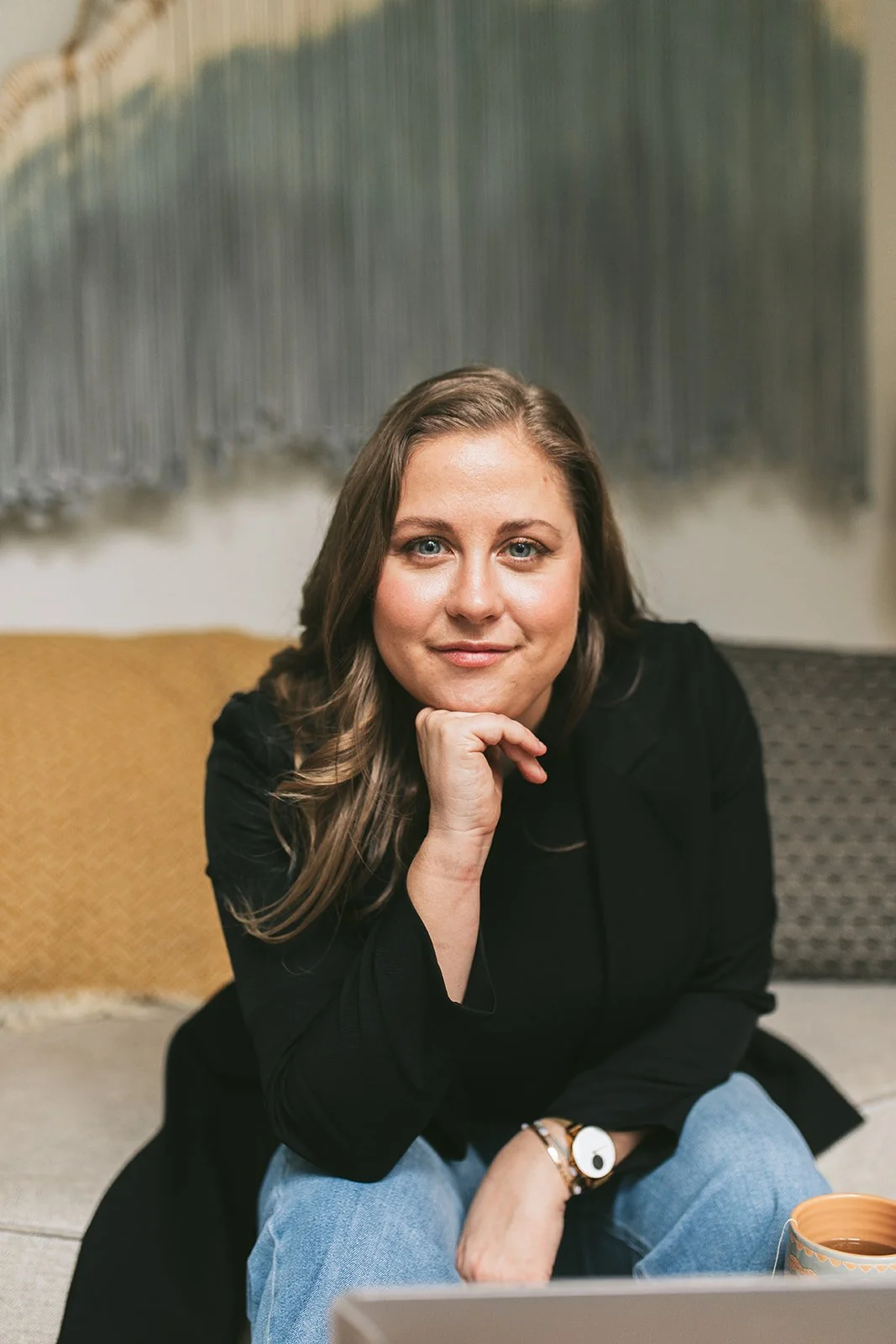
But somewhere between my own healing and a lifelong obsession with understanding why people do what they do, it became the most obvious thing in the world.
My Story
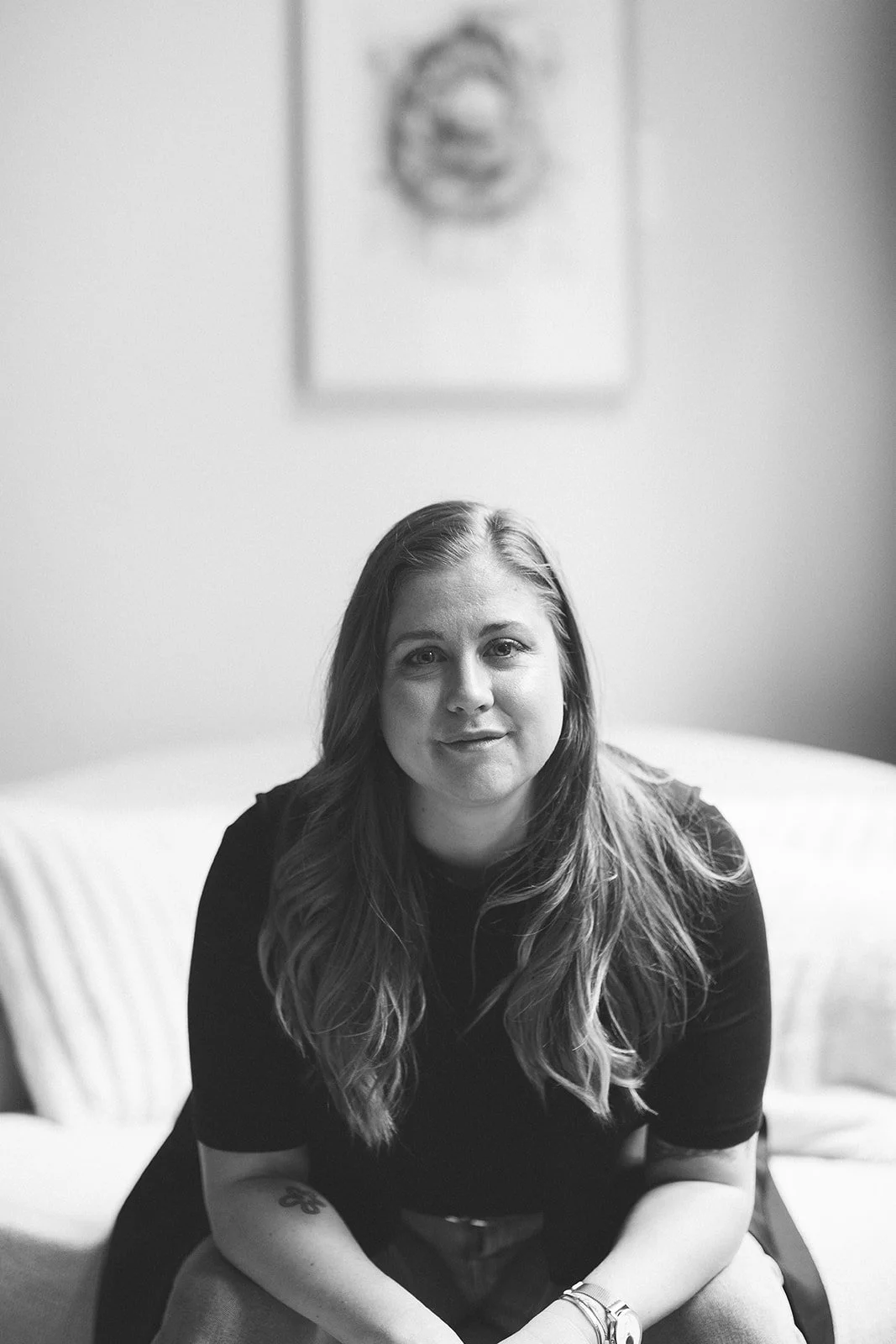
I came from a loving home. And for a long time, I used that as a reason to minimize what I was carrying: anxiety, depression, a low-grade exhaustion I'd just accepted as normal. I didn't think it was bad enough to need help.
Therapy changed that. Not because my problems turned out to be dramatic, but because I learned I didn't have to do life on hard mode. The realization that suffering doesn't have to be severe to deserve attention is at the core of how I work with every client I see.
I've also always been quietly obsessed with humans. Why people do what they do. Why the same wound shows up differently in different people. Why patterns repeat across generations, relationships, and nervous systems. Honestly? Figuring that out makes me feel like I'm good at something. And being good at it turns out to be useful.
I didn't expect to become a therapist. But here I am. And I'm genuinely glad I am.
I live in Bellingham, Washington with my husband and my dog. I craft, do puzzles, play cozy video games, and I'm newly obsessed with TTRPGs. I'm a low-key outdoors person and a dedicated foodie.
As you can probably guess, I'm also a bit of a nerd with a neurospicy brain that I'm learning to lean into, which, it turns out, makes me pretty good at seeing the things other people miss.

-
I've completed the IFS Institute Level 1 Training, making me an IFS-trained therapist. I have also completed the Comprehensive Internal Family Systems Therapy Course through PESI, NICABM's program on Applying IFS to Complex Clinical Issues, and have spent years reading, experimenting, and refining how I bring IFS into the room.
-
I received my Master of Arts in Clinical Mental Health Counseling and a certificate in Marriage and Family Therapy from Richmont Graduate University in Chattanooga, Tennessee. I've been practicing since 2019 and am licensed in Montana, Tennessee, Texas, and Washington.
-
I'm also trained in Sandtray Therapy through the Texas Sandtray Association at Levels 1, 2, and 3. Sandtray is a body-based, experiential modality that can access what talk therapy sometimes can't. It's one of the things that makes this work feel genuinely different.
Training & Credentials
How I Work
I'm not a blank-slate therapist. I'm warm, direct, and genuinely curious about you, not just your symptoms. I'll notice patterns you might not have named yet. I'll ask questions that go a layer deeper than what you came in with. And I'll be honest with you, even when honesty is uncomfortable.
IFS gives us a framework for understanding the different parts of you, the ones that overfunction, the ones that shut down, the ones that have been trying to protect you since you were small. We're not trying to get rid of those parts. We're trying to understand them, and eventually, give them something better to do.
This work is experiential, not just intellectual. That means we're not only talking about your life, we're working with what shows up in the room, in your body, in the moment.
Wanderwell Counseling is a fully virtual practice. All sessions are held via secure video.
No office, no commute, just consistent, focused care from your home.
You might be:
A high-achiever who's exhausted by their own competence: overfunctioning, over-responsible, and quietly running on empty
Someone whose anxiety or depression has always been "manageable," but you're tired of just managing.
Someone still carrying childhood trauma or old family wounds that show up in your relationships, your body, and your sense of self, even when you can't always trace them back to their source.
Someone navigating religious deconstruction: the grief of it, the identity shake-up, the relationships that don't survive the shift.
Or an LGBTQ+ person who's tired of spending the first six sessions explaining your life before the real work can begin.
Who I Work Best With
I do my best work with adults who are curious about themselves, even when that curiosity is uncomfortable. People who suspect there's more going on beneath the surface and are ready to find out what it is.
You've probably tried therapy before. Maybe it helped a little. Maybe it didn't quite fit. Either way, you're here because you want something more than coping strategies.
This might not be the right fit if you're looking for short-term, solution-focused work or a therapist who stays at the surface. That's legitimate, it's just not what I do.
Ready to see if we’re a good fit?
*
Ready to see if we’re a good fit? *
The consult is free, low-pressure, and genuinely just a conversation. We'll talk about what's bringing you here and whether this feels like the right place for that work.