

Childhood Trauma
Did something happen to you or did something happen inside you?
“Trauma is not what happens to you. It’s what happens inside you as a result of what happens to you.”
- Gabor Maté, MD
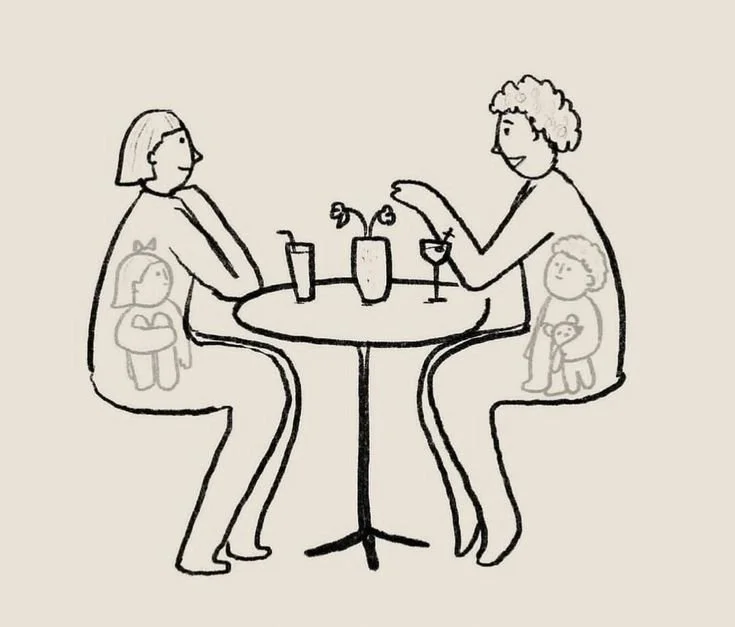
Childhood trauma isn't always obvious. Sometimes it's the meaning you made of yourself before you were old enough to know better.
You might not think of yourself as someone with a traumatic childhood. Maybe nothing dramatic happened. Maybe your parents were good people who did their best. Maybe compared to what others have been through, yours doesn't feel like it counts.
But your nervous system doesn't grade on a curve.
Childhood trauma often lives in the conclusions we drew about ourselves when we were small. That we were too much, not enough, fundamentally flawed, or responsible for things we never should have had to carry.
Those conclusions didn't disappear when you grew up. They went underground. And now they show up in your relationships, your body, your inner critic, and the moments you least expect.

You're highly self-critical in a way that feels automatic and relentless
You struggle to trust that relationships are safe, even when the evidence says otherwise
You overfunction, over-explain, or over-apologize
You feel responsible for other people's emotions
You shut down, go numb, or disappear into yourself when things get hard
You've always felt like something is wrong with you, even though you can't quite name what
You've done some therapy before and made progress, but something still feels stuck
What This Might Look Like For You
You might recognize yourself in some of these:
How We Work With It
Childhood trauma isn't something you think your way out of. It lives in the body, in the nervous system, in the parts of you that learned to survive before you had the language to understand what was happening.
Using IFS, we work directly with those parts, the protectors who developed strategies to keep you safe, and the exiles who are still carrying the pain of what happened. We don't try to eliminate or override them. We get curious about them, earn their trust, and help them unburden what they've been holding.
I'm also trained in Sandtray Therapy, which offers a way into this work that doesn't require you to have the right words. Sometimes the most important things are the hardest to say out loud, and sandtray creates a different kind of access.
This work takes time. It's not linear. But it is possible, and it's some of the most meaningful work I do.
A Note on Courage
Coming to therapy with childhood trauma takes a particular kind of courage, especially if part of you still believes it wasn't bad enough to deserve attention. I want to say clearly: it was. You were a child doing the best you could with what you had. That's worth taking seriously.